Showing posts with label Women. Show all posts

17.3.16

Up In the Air

I derive some inexplicable pleasure in choosing the emergency exit seat on flights. A lot of people find it restrictive: you can't keep your hand bag on you, you can't shut the window on a sunny afternoon, you can't recline, you can't keep your tray table open for too long, your seat belt needs to be clutched at all times, and the barrage of bondage is endless.

Several others though, especially the particularly long-limbed, count the merits of the emergency seat. 'So much legroom!' they argue to silence the naysayers.

But my reasons, even I do not know.

The standard set of mandatory special instructions arrive in the form of an extra pleasant air hostess - one who will smile, not scold, and almost sympathize with just how many times you must have to put up with this routine, yet lend her a patient ear. She can see that I come prepared: no luggage in hand or under the front seat, no reclining, no fussing about the sunlight. In medical terms, I'd be the ideal patient. Patient, practical and reasonable.


This window seat invariably distracts me from my book, even if I've flown to or from the same airport several times. The colours, shapes, markers of the wider landscape surrounding it, especially those that change rapidly whilst developing the city's outskirts, make me wonder what motivated the change. A farmhouse property outside the city periphery below the wing of my plane still flying rather low on this high visibility Monday afternoon shows chunky wooden garden chairs and a trampoline and a single storey with canopies on all sides widely spread on the property. The colours belong distinctly to the retro circus family - white, red, yellow, cobalt, mint...

I spot another estate not too far away with a remarkably vast lawn and a single white (presumably) cane pool-side recliner in one corner. It presents a picture perfect frame from up here. Of tasteful affluence, of awareness about the good things in life.

The flight climbs higher in altitude. We float above the occasional little bursts of snow white clouds dotting the blue filter, beneath which one can still make out land demarcations rather vividly. Then my gaze stalks the swiftly changing palette from ground to horizon to the sky above.

'Sky blue', the hue we've all grown up referring to lighter shades of the primary colour, has, one realises from this intimate distance, a perceivably powdery texture. It is not as pale as the chalk in your wax crayons box. It is so much more intense and bright. It has the authority to lay down its cards yet not allow you a varied perspective. It's all the same beyond this point, it seems to affirm. Yet I can't quite pinpoint the particular angle at which one might look and decisively state, from here the sky appears constant.

I also think this preference for the emergency seat comes from my lack of tolerance for bullshit. Can you imagine the hazard someone fussy and idiotic might cause in a situation that requires helping, thinking on one's feet, and exiting from here?


I'd probably end up yanking the person out of the aisle and flinging him or her to a place of no hope. Perhaps even stabbing such an imbecile. I reckon I'm doing a lot of passengers just a huge favour- taking one for the team, as it were.

A perk of extra leg space for the average tall Joe or Jolene, well it just sweetens the deal for this superhero.

7.3.16

Navsari

​Navsari, a nondescript little town en route the Western Railways main line, a station between Valsad and Surat, native to many a Parsis and as many Gujarati Jains, the closest rail to Dandi - where India's first realisation of freedom was spelt. The place where I discovered Gujarati gastronomical wonders such as લસણીયા બટાકા, cheese butter masala, Budhiબેન ની ચા and the array of delicacies waiting to put you in a culinary tizzy at Lunsi Kui.

Since that first time in March 2012, it's also been a town, which I've met more people who call home in some form or another. A past that is more resistant to change for fear of losing its heritage than for fear of change itself. An ethos so full of purpose for the causes it had supported so far, and promises to carry forth through generations to come, quietly, but resiliently.

Unlike bigger cities of Gujarat, Navsari has steadfastly spat in the face of bulldozing development, even when its excavators and concrete slabs prevailed, almost as if echoing the sentiment of the man who broke the salt law not farther than 14 km away. It has not cowered in the wake of modern political oscillation. It has shown the middle finger to Bombay.

Then again, it has opened its arms to embrace Bombay's injured and inebriated.

Navsari opens its arms to embrace Bombay's injured and inebriated


And then Navsari comes to Bombay. And it says, you folks don't know how to live; I don't blame you for not singing here in your open voices, and not throwing back your heads uncontrollably when you laugh helplessly; આવ, હૂં તને પમ્પોળું; આવ તને વ્હાલ કરું અને પ્રેમ આપું; તારી ચિંતા અને કદર માં તને વઢુ અને સમજાવુ (come let me caress you, let me give you my affection and love, in caring for you and appreciation, let me scold you and teach you).

I've written about it before on this blog as a place of music, a short drive to the beach, and as the childhood nurturer of my friend, Veeram. Navsari belongs to anyone who wants to be Navsari, really.  In that, Navsari is a sanctuary that is independent of its geography, its people, its old architecture and meandering lanes. Hell, it might be a town with few or no opportunities, but where loans and debts are not equated to sustenance or sustainability. Patience and perseverance get you there.

You can check out any time you want, but you can never leave
If you want to be (in) Navsari, you needn't even take that four-hour train ride, for it is not some memory stamped on your heart or nostalgia.

Navsari is a state of mind. To achieve it, you must be honest to yourself constantly.

And then you enter the realm of the real and the realistic. Then even your tiny hole-in-the-wall-like room in the queen of Bombay's suburbs would feel like Navsari.

Navsari is like that. You can check out any time you want, but you can never leave.

9.3.14

Violence vs Silence


I woke up this morning to the sounds of a man hurling abuses at a girl and physically assaulting her. Needless to say, my Sunday morning was about to be ruined. For about an hour all I could hear was the man shouting, hitting this girl and the girl begging him to stop hitting, that it hurt her, she screamed more than a couple of times.

The context

This girl – about 23 – is one of the three tenants of my landlord's other house next door. My landlord is also the building secretary. He does not live in the building. Is it even legal for a society to appoint a sec'y-in-absentia? And if yes, is it logical? I’m inclined to believe otherwise, in light of recent legal developments. But perhaps that is beside of the question.

Let me set the context. Like in buildings in most middle class localities in Bombay, my building too has a skewed sense of design. Most balconies - even with next door neighbours - fall at the bare minimum distance of about a foot and a half or two feet. Obviously, most sounds easily permeate to the neighbours if you're speaking even at normal decibels.

The girls next door are loud.

I've had to ring their doorbell several times in the middle of the night to ask them - ever so politely - to STFU. Most times, this works. Sometimes it doesn't. I've heard sounds that range from sitcoms and music, conversations with parents over Skype, phone calls with the boyfriend, girl talk about clothes and hair and first sex, to three rounds of sex itself, card games and as of today - abuse.

What is one supposed to do? The landlord has been told several times - in vain, of course. The neighbours can't do jack shit. And calling the cops is always a last resort. Do I not know that one can complain anonymously on the police hotline? Of course I do. However, will that stop the cops from harassing the complainant?

The law

I was at the CII India Women's Network launch on Friday, where Meeran Borwankar, Additional Director General of Police, and I G Prisons, Maharashtra State, was a panellist at one of the discussions. Since awareness & engagement was being spoken about in several areas of societal functions, the law wasn't spared either. This question of trusting the police sprung there too. The defence at both ends was legitimate. The police force is under-staffed and so want to close as many cases, and as soon as possible. They are frustrated. So they try and catch those unaware of the law and try and sweep matters under the carpet by passing off the innocent as criminals? Yes, it's a vicious cycle and we are left no choice but to accept that they need better facilities and to be provided for from the taxes we pay. But until that pipe dream falls into implementation, how are civilians expected to trust them?

Support

My first instinct was to confront the girl; tell her that both my roomie and I were literally just a holler away. That we may have had problems with them, but we weren't going to tolerate inhuman behaviour. Sadly, she was subservient.

I also tweeted about it. Despite the anonymity and a general sense of detachment of the platform, there is a degree of sensitivity and trust even in the unknown. People pitch in to advice, suggest solutions, offer the first impulse of support. In fact, here's a snippet of the conversation that ensued between the five of us - some simple inputs and advice that can be used at short notice.

Twitter conversation this morning (9th March 2014 - a day after International Women's Day, btw)


I also decided to reach out to our neighbours - thankfully this city allows socialising at one's own limited terms. The lady immediately offered her cell number and assured that the next time this happened I had only to tell her and she'd call the cops.

Hope

What is most amazing, is that the city still has faith in the law.

Hopefully, this blog post will serve as a window to help. Evidently, your educational qualification is no indication of your awareness and ability to speak up. Most importantly, it doesn’t even make you human. It was made clear at the discussions yesterday at the IWN launch too – we need to stop blaming the government, the law, and most importantly, men. It’s not an attitude problem characteristic to this country alone either. As my roomie said, the victim could have sold herself and still cannot be treated this way.


I am going to remain shaken for a long time. Not only because this was so real - after all, this girl should mean nothing to me - , but because I witnessed it at such close quarters. What warrants violence? And what justifies silence in us human beings, when reaching out is not difficult? Among the several loud conversations I’ve overheard (inadvertently, of course) from these girls, they come across as rather opinionated personalities who know what they want. Doesn’t safety figure in their list of priorities? Doesn’t self-love count for anything? What about the thought that they live far away from home and their parents would die of the worry at the slightest hurt that would come to their child?

1.1.14

Book Review: Lady, You're Not A Man! by Apoorva Purohit

Anant Rangaswami shared an image quote on his FB timeline yesterday that said, "Seeing someone read a book you love is seeing a book recommending a person". And of course, you'd want to say 'how true!' It got me thinking about all the times that I carry a book to read on my daily commute or to a cafe when I know I'll have to meet a friend who has the CLS (chronic lateness syndrome) or even on a beach holiday. How do people perceive me when I'm holding a Coetzee's Disgrace, or Mistry's Such a Long Journey or Barsamian's series of interviews with Noam Chomsky or - my latest weight-in-the-bag - Radio City CEO, Apoorva Purohit's new self-help bible Lady, You're Not A Man!.

When I was given this book with the prime motive to review it, I dreaded it right from the start. For several reasons:

1. I don't read self-help, so I'm probably the wrongest person to ask for an opinion
2. The title turned me off
3. It would mean reading and then having to write about the writing

I realise I made the mistake age-old wisdom warns you against - you know what they say about judging a book by it's cover.

Lady,... is an easy-to-read-&-implement sort of book. It's the sort of manual that should be prescribed reading in all graduate schools for women. Having known several managers and now being one myself professionally, it's blatantly clear that Apoorva has implemented her b-school lessons in life quite successfully. As someone who has evolved from, instead of placidly accepting life's lemons, you can quite see how she's made serenely pink lemonade out of them.

I love how she has not, even once, fumbled or mixed up feminist sensibilities in her book and cited several anecdotes in the book to make it most relatable. What makes this book most credible is the little acknowledgements section at the end that lists the women whose anecdotes Apoorva has included in the book. A couple, I happen to have known professionally. And that is what makes the book an interesting read.

Whether you're a daughter, mother, wife, daughter-in-law... intern, noob, mid-level manager or part of the senior leadership at your organization... whatever role(s) you play and/or cherish/ detest, this one's a good go-to. It's like Art Of War decoded for the urban woman in the 21st century. Matter-of-fact, practical and compassionate.

Dedicate your next long train commute to Lady, You're Not A Man!. It's not a bad compensation for losing some cradling sleep.

4.7.13

On Sale Sans Discount

Blonde, long, straight tresses, shining under the street light on the shoulders of a pretty, broad framed, fair and clear skinned woman at 11:45 pm, across the street from my house overlooking one of Bombay's arterial roads – home to shoppers from across the city by day – and as I was to discover as soon as I kept up late, by night too. The age of the woman is hard to decipher, but her clothes, today a coordinated red trouser with a pale red deep neck tunic, preserve her radiance well. She constantly plays with her hair, adjusting her tee shirt now, standing akimbo now, resting her gaze at male passers-by: sometimes anxious, sometimes dismissive, sometimes tired, always cool and up for a haggle.

A stamped Gulmohar just fell out of the back pages of the book I've been reading – Ismat Chugtai's The Quilt Stories. That's what broke my description of one of the three prostitutes who operate out of the nondescript old mansion.

It's been only a while that I have begun to acknowledge the presence of sex workers as a prevalent and unavoidably huge chunk of society. Three set up shop late each night in full view from my living and bedroom window, which I observe in the comfort of the locked and safe darkness of my house. A faceless spectator for as long as I want.

Yes, yes, now you'll say you stare at prostitutes from your window? Haw.

But they're fascinating, I'd say. It's hardly voyeuristic when you think about it. Yes, they're people your parents, your boyfriend, your boss, your neighbours, your friends don't want you crossing paths with. And I ask, why not? I wonder what it would be like to have a cuppa चाय with her at the neighbourhood after-hours टप्री . Or cook and eat with her. Plain old दाल - चावल . And laugh. Laugh about the bumbler, my cats, the dogs on the streets – the ones they must dismiss and the ones they love petting.

It is uncanny, this constant parallel universe I've found myself in, overlooking a prostitute's. From being just a bridge-and-a-lane away from Bombay's oldest red light district, to witnessing transvestite sex workers at peak business hours on my way back from work to the wannabe film star's haven. Now here.

The journey has been from sheer ignorance and denial, to indifference to interest. The indiscriminate and infinite curses and descriptions of partition that Ismat Chugtai's stories are made up of, are a wealthy demonstration of both 'our' perceptions, and 'their' attitudes.

Don’t they have as much a God as we do? Don’t they feel as much pain in dealing with autowalas as we do? Don’t they work harder (sultry summer nights, heavy monsoon rains, fatigue, injury, fever) than we might ever have the gumption to?

The other evening I got home late and almost scolded my autowala for stopping right in their midst. That is also the night I discovered they aren't your regular prostitutes, they are also transvestites, which kind of makes them rather 'multipurpose' from our angle and 'ingenious' from theirs.

It will take me forever to enter into a conversation with one of 'them'. Their ability to snub so confidently intimidates me.

28.6.13

Art

Halfway through his month-long stay in Bombay, Anubhav Rao, a fresh tweenager intern and I were in the auto late one weeknight heading to Bandra's cheap watering hole, Janta. Among the few things we spoke of on the quick drive, work - his & mine - came up. Anu completes his internship at Crude Area next week. At the time of our conversation, he had been asked to write short descriptions for a few art pieces, since Crude Area sources, curates and sells affordable digital prints by artists from around the world.

Anubhav was confronted with a dead end on the assignment. As articulate and competent he is with words, arty jargon was a first. I began rattling off some areas of focus – colour, treatment, elements, mood – and then a mildly amusing 'texture' he chorused with me.

We meandered to other related and tangential topics through the course of the evening. He is observant, even if not a talker. But the comical one-word chorus set me thinking.

I've known about, and the people behind, CA for barely a few months now. Their hard-to-miss ethos, however, even in a front page ET story from last weekend, is to make art 'accessible'. As author of the Prix Moliere winning play Art suggests, "There's no point… if it isn't accessible, because no one will see it. The greatest… were also accessible."

Art is a limited space & time play about three friends and their perceptions of a really expensive 5' X 4' white painting with some barely perceivable white diagonal lines on it. In the course of the play, their discussion heats to a violent brawl and the three end up questioning the very fabric of their friendship.

Art. A space that is hazy as hell and crazy as can be; chaotic as peak-hour traffic in this city and peaceful as the desert landscapes of the Iceland Pico Iyer describes in his travelogue, Falling Off The Earth. And amid all of those anomalies and harmonies lie the sometimes elitist, sometimes nonsensical, sometimes baroque and sometimes relatable pieces of art. As an increasingly unsurpassable factor in cultures across the globe – especially with pop versions and styles gaining strength of numbers and prominence – art of any kind has become impossible to ignore. But how do you enjoy it? Surely a 14" laptop screen isn't the best way to take it in – however convenient. Most of us can't spare the hours to gape at an original at an art gallery or museum either. In the constant vying for mental space that music, fiction and visuals squabble with on TV, on the internet and of course in our world around, isolation of any one form of aesthetic rendition is not only a ludicrous thought but also a rather narrow approach.

Like meditation, any, however menial, study of aesthetics requires at least one catalyst. It could be a drone or a refrain, a painting to complement what you might be reading.

A few days back, someone shared a recent piece by Stephen Fry on Facebook. The immediate impulse was to click on the link and quickly skim through its contents. Fry quotes one of literature's most famous speeches from Shakespeare's Hamlet:
To be, or not to be: that is the question:
Whether 'tis nobler in the mind to suffer
The slings and arrows of outrageous fortune,
Or to take arms against a sea of troubles,
And by opposing end them? To die: to sleep;
No more; and by a sleep to say we end
The heart-ache and the thousand natural shocks
That flesh is heir to, 'tis a consummation
Devoutly to be wish'd. To die, to sleep;
To sleep: perchance to dream: ay, there's the rub;
For in that sleep of death what dreams may come
When we have shuffled off this mortal coil,
Must give us pause: there's the respect
That makes calamity of so long life;
For who would bear the whips and scorns of time,
The oppressor's wrong, the proud man's contumely,
The pangs of despised love, the law's delay,
The insolence of office and the spurns
That patient merit of the unworthy takes,
When he himself might his quietus make
With a bare bodkin? who would fardels bear,
To grunt and sweat under a weary life,
But that the dread of something after death,
The undiscover'd country from whose bourn
No traveller returns, puzzles the will
And makes us rather bear those ills we have
Than fly to others that we know not of?
Thus conscience does make cowards of us all;
And thus the native hue of resolution
Is sicklied o'er with the pale cast of thought,
And enterprises of great pith and moment
With this regard their currents turn awry,
And lose the name of action.
But it wasn't half as much fun as I thought it would be. The mind demanded a far heightened experience of the passage from Hamlet's Act 3 Scene 1 that Fry quotes in his piece. There was also an immediate urge to open YouTube and play the Beatles' Eleanor Rigby, because he finishes with a line from the song.

So I went back to the soliloquy from one of Shakespeare's most renowned and depressing tragedies of blind distrust in love. But half way through this altered reading, I caught myself, this is no good. The vocals in the song hampered the absorption of the monologue. How about an instrumental orchestra version then? The last one is not hard to find since several 50-piecers of repute have attempted it to great degrees of success.
Since I tend to read with pauses of moments to look up, a new craving launched. My eyes wanted a view of this painting from my living room (thank you CA!).

Killer Tune by Enkel Dika
I finally played it all out in my head, like the final take of a film reel. So perfect, so harmonious, so ironically peaceful, for Fry's piece was about loneliness.

Now I had an element each to enamour my senses – my vision, hearing, speech, intellect, touch (for it sure gave me goosebumps). If only I had my sister's often-opened copy of the volume to read it from, as the aroma of yellowing paper would make my olfactory go into a tizzy.

Then again, if wishes had wings, I would have few new experiences in art to look forward to. For now, I revel in the sheer possibility of recreating this delight.

31.12.12

Pondy Hopping II


I discovered an aspect of Pondy I've so far studiously avoided. And a big part of the motivation was the aspect itself - the people! It is only when you stay there long enough that you realise that the people in Pondicherry have an approach to life that is, most importantly about equality and equanimity. Here are some that surfaced in my six days of wantering there on foot, on bicycle, at restaurants and road side coffee shops, boutiques and beaches.

Wordle: work

Limited work hours

Something that a close friend who works there once said rang jarringly this time - it's perfect - you work hard all through the week, because there are no distractions. Over the weekend, you are free to laze, or get out of town to escape to the bustle of the as-urban-as-it-gets Chennai/ Bangalore. However, if you're not a corporate bug in Pondy (far more likely unless you're employed with one of the two or three national or international organizations that bear roots there), it is possible to live the old world or even European life in Pondicherry with absolute ease. Business doesn't start before 10 or 11 o'clock in the morning. Everyone shuts for lunch & siesta, and then it's time to shut shop by 5 o'clock. If you're in the restaurant business, last orders must be wrapped up by 11:00 pm. Even in the 5 stars. That brings me to the next point.

Recreation

Pondicherry might seem dry and sleepy to those visiting, but one look at the notices and flyers at the several watering holes and cafes in the French town and Auroville will tell you that's hardly the case. Yoga, dance, theatre, music concerts, it's all there. The town's people have many a ways to keep themselves entertained and in high spirits.

I can't imagine any other town's municipality blocking their most scenic route for a couple of hours in the morning and some more in the evening for its people to stroll and enjoy the sea's roar and breeze. Oh yes, the people treat their daily jaunt like religion in Pondicherry!

Self sufficiency

Watching women on auto-geared two-wheelers is a common site anywhere in India. On a motorbike too, one might spot quite a few of them across most towns in India. With kids, the week's grocery shopping and a work bag - now that was new. Even if this last peculiarity was only a common siting in Auroville, I'd say the foreigners set a blaring example in Pondy and for the rest of us to rely on our strength ability to multitask.

On a less obvious aspect too, people in Pondy seem to be able to do what they like more easily than the rest of us. There seems to be the exposure to do what they want - I haven;t met so many enterprising people in one town - whether it is starting a little curio corner, a restaurant, a toy shop, a bookstore or a bamboo products boutique (that includes possibly the softest fabric I have ever touched!).

Unbiased by gender

My favourite haunt in Pondicherry still remains the coconut vendor opposite the General Post Office and the Governor's Bungalow. That woman exudes not only confidence, but almost terror in many an outsiders' eyes. For me, she has been the ultimate epitome of strength and ferocity - contained in a cheery smile and flowers that match her saree.

I've seen burly women managing cash counters of cycle repair shops, and dainty ones serving three tables at a time in their own cafes. None looking life threatening, all cheery and ready for the world. There is truly nothing a man can do that a woman can't, it seems in Pondy.

The distinction remains

Pondicherry is a paradox. The French town has none or few living there now - the buildings are mostly government property or ancient bungalows owned by Tamilian locals who choose to live in smaller houses for convenience of maintenance and awaiting a mad occupant to revive it while also paying for the rent. Foreigners in general are mostly a feature of Auroville, where Indians are a minority (48% of the members) even if a marginal one.

And yet, the whites vs browns distinction is clear. For even the foreigners who have spent ages here, or born here (second generation and therefore, I'm guessing eligible citizens) either do not choose to serve in government positions or aren't entitled to (not sure which). They stick to their private jobs or occupations or professions while the Indians go about their business in the allies and marketplaces and offices.

Ironically, when just a couple of weeks ago we were hosting a Frenchman here in Pune - my first encounter with the nationality at such close quarters - I realise there is a striking similarity in the obstinate pride of intellect and opinion between the Tams and the French!

Dignity to profession

A quality that makes even the most menial work force in Pondicherry take pride in what they do, is the dignity of labour. Whether it is masons at a construction site, stewards at a restaurant, vendors at the Grand Bazaar's Goubert Market or elsewhere, people truly serve with a smile.

Love for liberty

I've yet to come across more entrepreneurial individuals in another small town as in Pondy. Everyone seems to be an independent professional - either they own a coffee shop (sprouting at the rate of a dime a dozen!) or are designers, architects, consultants, something this or the other. They seem to need little to start and much less to sustain themselves.

Colourful

Clothes and walls seem to be quenchers of Pondicherry's thirst for colour. And it is everywhere. Whether you are eating out or shopping or at work - it seems to almost personify the town. Bright ochre, parrot green, vermilion, lotus pink, cobalt blue, royal purple... You can't miss colour if you're in Pondicherry! And you have little choise but to immerse yourself in it or it would be hard to believe you were ever even there...

2.4.12

Highway to high way


3 days. A long weekend. Many cat lovers. And a chocolate cake. As soon as I had moved to Pune three months ago, I knew this place had energy in store for me. I began to unlearn all my previous paces: of home, of Nizami thaat, of hapless filth. Even before I had arrived, I had been sold its lures. And the lure didn't lie so much in the monuments, in the food, in the city's chaos, oh no. Just people.
Plain vanilla people. 

Women with pishvis, men in collared tee shirts or bush shirts, young techies with id cards dangling around their necks like nooses, kids in uniform with oil drenched hair, the big cars and their humble drivers, the autowalas and their माझ. Indeed, the rosy winters and the perennial bougainvillas did their bit in making me fall in love with Pune, but it has, honestly, been the people who have visited me or the friends who I've met whilst they were here on business, that have strengthened the heartstrings even more. I am yet to strike out any of the items I had jotted down on my to-do list while I'm here. But no matter. There's a vintage Beetle, ragged and rusty, cobwebbed, with its paint chipped, waiting each day for me to turn right from - a landmark not preempted. A charm that has the power to surprise everyday.

And yet that is also not it. What about Veeram's house? What about my own? What about my favourite restaurant? And its काली दाल and बैंगन bharta that I've yet to savour again?

So Sajani was here over the weekend. Here only to see me and, on short notice, also to rescue Duffer, my newly adopted tom. Having known Saj for almost seven years now is a tad hard to believe, because really, it was only that first week of spending concentrated hours with each other several times that account for our experience of each other. For our knowing of each other. For our comfort of each other. We have never lived in the same city, leave alone studied or worked together. We come from culturally diametrically variant backgrounds. Our achievements differ from one another's, and so do our losses, but expression has been so liberating with her! And perhaps our judgement and opinion of each other came about painstakingly slowly, but it is only a thing of wonder how often through both our car rides to and from bombay this time, we seemed to have been having two parallel conversations with each other: a verbal one, that goes yaketty yakk, and then there's our eyes that meet almost as often as there is stupidity prevailing. And Saj's talent allows her to speak even with a poker face, where I may be tempted to break into a giggle, roll my eyes or simply hit my palm to my face.

I reckon that our judgement of people comes partly if not entirely, not only from our experience of the world, but also from our mothers. We often don't get their kinks, and yet. For hours, we would lie in our PJs analysing the people we love and hate, and when a third person would enter, suddenly shut our eyes - Eyes, gobs, tolerance too actually.

Bus ride with Sajani, Bombay, 2010
And that familiarity manifests itself in myriad ways. Whether it is her calming me in my own house after an especially tiring trip by articulating my thoughts exactly, whether it is to get chatty with my roommate, whether it is taking a bus ride across town right after a long flight or train journey, whether it is to wait in the lounge area of my office as I get my stuff and swipe out after bunking half the day in my boss's absence, whether it is to tolerate an especially irritating boyfriend for his inane and dated arguments and fielding each one with a hard verbal slap back in the days, whether it is cycling in the hot sun across her university campus. And yet none of these episodes quite define the scope of our friendship. If she were a guy, I'd have probably professed my undying devotion to him. Not only for what he'd've been, but for what he was doing to me.

Her pune trip, like all her visits to all the cities I've stationed myself for a while in, was short, but not meaningless. It was rich in conversation, in experience, in details and in thought. She fished out a teracotta ring for me with a grumpy cat on it from Milan. She took care of Duffer in his most critical first journey across towns. She ate whatever I gave her. And she drank simply. She walked, because she enjoys roads and trees just as much as I do. She warmed up to Veeram simply for the warmth I had for him. She fussed not. She complained not. She remarked. She judged. She dismissed.

She got me a box of strawberries so I could sing for her and we could smoke outside a shut shop sitting on the ledge in Aundh.

To be friends with Sajani is not an ordinary honour. She takes forever to warm up. Her mocking smile is hard to fathom - am I her subject of scorn, and therefore ridiculed, or does she truly respect me? Three years it took me to know what she thought of me, and she chose to bare all one evening in 2009 when all was beginning to look bleak, loss seemed inevitable, and abandonment seemed to look like the only way out for us cats.

There are people we feel the need to understand in order to love. Then there are people we must accept and love.

14.2.12

Love, of course!

Mushy Bollywood songs galore at the office this morning, and while I was just beginning to nauseate, Paroma laid her cards - I hate all these pink love songs! On impulse I reasoned that the Beatles too wrote them, but then I withdrew it. Not because I was suddenly confounded by the feeling that I was wrong, but because Valentine's day seems to have lost all meaning.

Someone at work asked me a few days back if I was doing anything special. And pop came the answer, "Valentines Day is for love. Not awkward fumblers." And a few days later I was told "I hope you're not expecting something spectacular...(for Val's day, that is)", and of course i dismissed it with all the dust and smoke doing the rounds in the confines of Aditya's 1 BHK.

Subir once told me that I wear my heart on my sleeves. Not so much a cassanova as a दिल फ़ेंक. Back then, it felt like a jab. A jab of judgement. Of being told off. For having just the infinite ability to love someone to bits, to love selflessly. Anyone. Anyone who was willing to receive. Anyone who was willing to acknowledge. Not even return. Just tolerate it. Honor, perhaps. Respect it. Keep it safely, if at all (?), in something of a sealed treasure box so no one stole it.

I even remember when this conversation with Subir had happened. Last January. Or Feb. I wept on the phone as I told him about my decision of leaving town. Almost achingly. That afternoon, because I had finally confronted my broken heart. Like often before. Of all oftens, Subir has known. Perhaps I spoke to him because he too has loved and lost but not stopped out of fear.

Somehow, every time Subir asks me to be careful, I chuckle to myself. What's love that isn't ruthless? What is love that hasn't that element of gay abandon? A certain mad glint in the eyes, a wild ring in one's laughter, some sarcasm, some confession, some forgiveness, all truth and nothing left to the imagination. Love isn't a game of reward and punishment. It isn't even an equal barter or equitably divided. There's no more, or less of it. It's not darts in the dark. It's a law that sees. Understands. And still plunges head first.

So sure, there must be quite a few who weigh the pros and cons in this transaction, but one half of the balance will always be heavier. That half will always demand more or give more or laugh more or forever weep!

So why must one love still, with that complete disregard for hurt and its ancillaries? Well, because that's how it's done. Because without love, February would be January! Because they don't call love a form of madness for nothing. It is not a task that must be carried out with preset steps, milestones and goals. Those are hurdles that cause falls. A fear of loss. And of course, like some people who think tattoos are addictive, love's hurt is no less heady! Distance, space, jealousy, indifference, callousness, abandonment - even if momentary - heck, just sleep.

But man the scar is beautiful. And to admire its story at a later date is nothing short of the greatest exhilaration, the pride of having earned it.

Tonight, I do fear losing. Tomorrow I might even lose; I might or might not be lost. It's 2012. the world is ending anyway. We lost our favourite and one of our first Profs at undergrad university on Sunday. A little bit of love can't kill anyone! So Love... Love... Love...

10.2.12

Hair

THIS short
Cutting my hair THIS short is always an unplanned affair. The itch begins a few weeks before though, but it almost always ends in this length or shorter. Of course, I've achieved a feat I've striven for, practiced and finally mastered over the past 7 years on several occasions. And while both roomies have been spectators, actively eventually assisted me in getting there tonight, and even applauded the outcome, the happiness is of simply losing it all. Yes, it's true. 

I've seen women cut their hair on film in a few films. One image I distinctly remember is Kalki Koechlin at it in Dev D. That is not to say, of course, that my attempt germinated from some sense of anger or suppression. If anything, it has made me so happy, I could dance all night! 

Not only does the loss of all my midway and reluctant-to-grow-more tresses that much less weight to bother with on myself, but also seems like a metaphorical unburdening from all the stress of having to cover my head and fuss over it all the time thanks to the dry and dusty weather of Pune. 

Social commentators the world over have maintained, as has research established, that short hair is the ultimate sign of confidence among women. Well I don't know about all of that. I know it doesn't make me look horrid, and I know my long and slender neck looks fabulous! 

I finally feel like shopping again! Finally going back to being the 13-year-old who cared two hoots about the frivolous housewives in the neighbourhood who thought my mother was mad not to encourage me to look more feminine (yeah, try growing up with a bunch of ruffians for boys, woman!). I don't know if I shall go back to my long hair. The only time it appealed was when I was so preoccupied with the charm of hyderabad; when I thought I didn't even have time to catch a breath because, oh god! there was so much to be done - classes, plays, concerts, assignments, my journo work, music, hanging out with friends who mattered over midnight cups of tang and elaichi cream biscuits. 

No, I am not that anymore. It was my time of being lazy, and stable. That was, actually, my only truly linear phase of life. Uf. Look at me, analysing phases and connecting nonexistent dots over a blasted hair cut!

And remember, घर की खेती... whatever makes me happy... it ain't yours babay!

9.1.12

Song for all seasons

Concert going audiences across this country, it can be safely concluded now, are alike. They can be identified explicitly by their body language. Something in their eyes, their gait, their stance speaks of their discernment. They may not walk straight, or walk at all, they may speak their strange dialects, they may squint despite bottle thick spectacles or stoop from being a genetically mad race, but they all know their ‘shit’.

If they have come especially for the concert, they’ll most definitely be at the very least jacketed or cocktail dressed, flannel trousered or silk stoled. If they have reading glasses, they will be tipped low on the bridges of their noses to read the evening’s programme. They will look for seats farthest from the exits and respect each movement with appropriate applause.

Even pre-performance drone will be in hushed whispers, not cacophonic banter, they will discuss common acquaintances too, but it all stems from a musical reference on the menu. Their next choice, if they’re young, will be jazz or opera. Somehow, Rahul Khanna’s Kabir in Wake Up Sid was highly reminiscent of this profile (of which I stole some snatches last evening with Anjie).

I was at a soprano performance on Saturday when these thoughts intermingled with my sense of gratitude to Aditya for probing me into making it even on my own (much like my good old MA-in-Hyderabad days) came visiting with soul-stirring music for background. Of course, Aditya as well as Veeram were of the opinion that I should have stuck to just enjoying my privilege. But perhaps it was a bigger kick for me to know that I could write with such superior music in the background. Sometimes the focal point of an event makes for stimulating background for another concurrent activity.

Patricia Rozario, Joanne D’Mello and Susanna Hurrel were accompanied by Mark Troop on the piano, bringing songs composed by Handel, Mozart, Bizet, Dvorak, Puccini, Johann Strauss II and more to my ears. More than the music, though, it was a bringing to fore of emotions from history like I may never know. These sopranos sing as if they express in song. The way you and I may animatedly describe our favourite books or films, or weep in excruciating melancholy or even scream in menacing rage.

And in the classical tradition of students carrying their teachers’ legacy a notch higher in quality, Joanne and Susanna carried forward what teacher Patricia probably taught them to toil after. The matronly Rosario on the other hand is no dull wad. Here’s a weathered voice rippling with experience not only of men, and the world, but also of being drenched in her own emotions, prodding all those who will listen or care, or both, to take that risk around the blind bend.

And Mark Troop’s piano work on the Bluthner brought back an old fantasy. Sometimes I imagined being in company of a pianist. One who knew what to do with his lambs and not stand around like a dandy. Nimble fingers, quick on feet. Always a tune on his notes stand, forever ready to break into a number. I recently realized pianists can be of the soul as well. Slender hands and lithe palms trace their way even in the most velvet darkness, a song that is meant only for me. Just like Saturday night.

What shall I say about the songs themselves? From the show, I mean. Mentioning each one would mean nothing. I’m an illiterate. But let it suffice to say that each one was sung with a certain abandonment of inhibition of the beholder: a flamboyance that was meant to be felt, rather than witnessed. The experience of so many travails, practicing in so many halls, trials in so many green rooms and post-performance cuisines from a hundred backstage dinners came through in the level of confidence each performance exuded.

After what also seems like an eternity of the commencement of my quest for the perfect live performance. Mazda Hall in the Dastur School compound seems to have presented itself as the prize for all the years of waiting, struggling through commutes, risking late nights, suffering some atrocious fusions and even more irksome pure forms, and worst of all, tolerating the most ill mannered and uninformed audiences in Hyderabad and Mumbai.

As I stood on the lawns outside the hall under an ominously beaming moon, I awaited the opening of the second part before leaving the delightful show. Yes, show. The women didn’t just sing, they enacted each song to the hilt. They became the song. They became Cleopatra, Juliet, queen and pauper…

27.12.11

Pondy Shondy VI: The Retreat's own queen mother

An old lady walked into the dining hall the night of our arrival as we hogged supper. Solo, in a confident slow gait, the wrinkled demeanour did not succeed in veiling the beauty she must have surely been of her time. In her pale pink salwar kameez and well set salt and pepper hair, she settled alone on a small table to dine. We noticed in her plate unusual portions for a woman that old and that petite. Even we ate less!

“Please,” I said, holding the door gesturing for her to pass first at the reception later that night as I made to go for a stroll with Twara after our meal. “No, no,” she insisted I pass through first. After a short battle with the obstinate old woman, I relented. It was embarrassing of course, but the beginning of a rendezvous that would last the duration, at least of our stay at The Retreat.

And of course we invited her to join us for breakfast next morning. Over the period of our time there, we ate several homely meals together at the guest house dining hall. Conversations revealed that she has been a regular to Pondicherry now for 11 years and spends a full two months beginning each December.

But here’s where this ancient relic became an indelible memory of my second trip to Pondy. I got shamelessly greedy for an extra birthday wish on my birthday and let it slip over breakfast. Not only was she the loving Punjabi granny to embrace me on the morning of my 27th, but when we returned from our jaunt the next day at lunch, we found a plum cake from Grand Bakery waiting for us at the reception, the tag said “Best wishes from Indira Kapoor, R. 211”.

The ways of knowing someone’s name…

1.9.11

Mobile Boutique


I bought my first Dhakaii cotton sari this morning. And my first Kota-zari yesterday. The Dhakaii couldn’t be more typical in terms of the work, but the body motifs took my breath away. Vermillion neem leaves on a turmeric background. I still remember my first. It was the green batik border-and-pallu on white I got from Shilpakala Vedika – the Hyderabad version of Delhi Haat. That was followed by a simple bandhej (a different shade of green from the previous) in a similar design. The Kota in midnight blue with a Banarsi style pallu and border from a small shop in the city’s newer shopping hub, and the Dhakaii bought today will be the only ones added since. The rest are mostly silks or chiffons.

Today’s buy was different in many ways.Not just the women, but also the man of the household was involved in selecting the right number.

My father is not one to visit sari shops, or for that matter, accompany us on our clothes-buying sprees. So it was novel to have him around as we got dada to open his potla (small pile packed in a cloth) of weave after weave of the nine-yard.

Why just a potla though? Apparently this chap picks pieces himself and comes to a select few families in the city. He’s like a mobile boutique. And he remembers each customer and the sari he sold to them. In his pile are none of those ordinary minimal weaves. His auction starts somewhere at two grand and can escalate to any heights he pleases (depending upon the time of year). He’s eager to sell right now so he can make some moolah and go home to his village in the 24 Paraganas and make it in time for the Pujo celebrations – the man is also an artisan. He decorates pandals, though I don’t suppose he’s very adept with the brush. His fingers aren’t nimble enough – they laze to fold the more difficult-to-fold silks.

I still wonder when a vendor says, “Madam ka choice bohot badhiya hai,” what it really implies. Is the statement made because “madam” chooses the most expensive piece? Is it because she chooses the most muted? Or is it because she chooses after him having displayed all his wares?

In that hour-long interaction in my living room though, I also sat amidst a philosopher – what “poverty makes one”, as papa puts it. The man spoke simple truths. How diplomacy works at the grassroots. In his little village, the Mamtadi government is not about radical changes. Well, definitely not changes in how the system functions, but surely the alliances men like my sariwala must strike up. “homara kya haay… aaj iska baju mein, kol uska torof…”


That statement alone took me back to all the Bengali connections I've ever had - alive and even the ones long gone - my dadi, the whole झुण्ड at CIEFL, Neel, Subir, Upas, Sushmita... a race that has earned its reputation of being a thinking one; of thinking enough to take care of the finest nuance of any task - cerebral or material - that comes their way...

I don’t know when I will wear these saris. It is most likely to become a family heirloom of sorts. 

11.7.11

Gaay ka ghar


I’m dying of laughter here – tears rolling – tummy in convulsions – the works.

The subject of our humour is Lucy-poosi-puchki. Our...who? Gayatri and I. Gayatri began by imitating the way Lucy scratches herself, “Like Bharatnatyam,” it seems. Suddenly Gaay contorts herself with a twist at the waist, and one leg lifted like she’d just had her love kiss, the face looks pretty much like the spitz’s anyway, and then she sticks out her tongue like one too. And then begins the scratch. That cracked me up. You know the silent laughter I laugh, when it becomes impossible for me to laugh any more helplessly?

Then I couldn’t help it so I asked G what Puchki was up to last night, making that strange noise jumping about on the giant pink stuff toy hippo’s stuffed foot. “Masturbating,” said Gayatri matter-of-factly. Imitation Round 2. In the kinky mind, I’m sure it already gives rise to plenty of ideas.

It would be of vital importance to describe Gayatri here.

My landlady is a short, stout Assamese 35-year-old. Well endowed, but not pretty. Neutral features, the Bollywood costume designer knows how to look good in whatever she’s clad – and she knows in what to be clad. A trendy haircut and clear skin, Gayatri is a strict landlady when it comes to tidiness. She is clean, hygienic and extremely minimalist-stylish. And considering the amount of screaming she does at Tania for leaving the house in a mess every so often, she does not come across as someone who would be funny. However, I wouldn’t call her menacing per se.

So I’ve seen Gayatri do the occasional jig of a Freddie impersonation in her high pitched voice, “when you call him to slap him also he comes wagging like-this, like-this (and she’ll do a little butt wiggle) and come as if to say ‘yes yes slap me now!’” Freddie’s a total simpleton. You kind’a come to expect dumbness out’a him. But really he’s just the tolerant man of the house, who takes shit from ALL the bitches in the house and keeps them humoured. And sometimes be the butt of their humour.

But mentioning Lucy’s romp was just the thing to get Gaay started. Since she wanted to avoid having to get out of bed in the middle of the night, and have the act carry on elsewhere, the hippo went into the living room. As Lucy followed close behind, Gayatri went, “Go! Go have fun with your King Kong Hulk boyfriend!”
And as Lucy turned to have a go at her new giant dildo, Gayatri says casually, “her tail is longer than her body.” Lucy the spitz is the strangest little hooch. I didn’t think lapdogs would be so hilarious – not only to look at but also in their mannerisms. She jumps all the time. She jumps when she runs, she jumps when she barks at Fifi, she jumps when she greets, she jumps when she wants a chewy, and of course, she jumps when she’s jerking off. Lucy is one jumpy bitch. If ever there was one.

And then there’s Fifi. Fifi and I have found each other. When I’ve barely opened the gate of our building complex, Fifi is already at the door waiting in anticipation. What of? Frankly, is still a mystery. All I do is play ball with her. But the deep blue doe eyes (a dog with doe eyes, yeah right) are the nicest thing to wake up to each morning and come home to each night. And the ivory ringlets are almost a dog’s-world representation of Belinda’s locks from La Belle Dame Sans Merci.

Sometimes I identify with Fifi. Sucker for a little bit of love. Slave of just the tiniest gesture.

1.3.11

Shantamma

Think of waitlisted admissions and small numbers in classes with alternative teaching methods and you’d think the principal of thie school has to have a waiting lounge, an ante room and must make you wait at least the Hyderabadi 15 minutes before inviting you into her chamber.

Snap out of it. You’re meeting Vidyaranya’s founding Principal, Mrs. Shanta Rameshwar Rao. The Fabindia-clad frail frame is home to one of the most determined educationists of Hyderabad. After my preliminary apologies of turning up late and being told (I still don’t know if it was sarcastic), “Pretty women are allowed to be late,” I was asked to be the silent spectator to a conversation between a volunteer parent, who conducts assembly for Classes 5 and 6, and Shantamma.

Without any pretensions of minding the flash of my camera or that an outsider was privy to a conversation about the school’s goings-on, Mrs. Rao displayed her many moods – amusement, concern, intent listening and approvals.

As we launch into the interview, one of the first things that comes to fore is Mrs. Rao’s devotion to education. That her ideas have arisen from the ideologies of Maria Montessori, MK Gandhi and J Krishnamurti is anybody’s guess, but to start one’s own school, is quite another ballgame. And a much bigger deal it must have been 50 years ago.

Vidyaranya is not the success story of one woman, but the will of one, definitely. What’s more, Shantamma is selfless about it. An atheist, the veteran educationist speaks plainly whenever confronted with ‘what after you?’ “It seems everyone wants me to die or is waiting for the eventuality! What after me? The school’s plumbing is managed by the plumbers and the teachers are doing their jobs. I think the school will go on even without me.”

“Even if it doesn’t work, what of it? At most they will turn it into a hospital – a children’s hospital, or even a hotel! We think too much about the future. We lose sight of the present.”

Shantamma is quick to dismiss the suggestion that her school is a women’s initiative. “It is just a co-incidence that most teachers are women – predominantly the mothers of students. But we are being supported more and more by male parents as well.”

Mrs. Rao comes across as a firm believer of gender equality. When quizzed about how she encourages the girl students at Vidyaranya High School for Boys and Girls, she allows one of her colleagues to respond. To them, having to especially encourage them would, in itself, be the first step towards proving them inferior. “Boys damage property sometimes,” she remarks, “There are just one or two in each class that cause a chain reaction. Girls are usually cooperative – we probably scold them for being talkative, but they’re never destructive,” says Shantamma.

"I trust you to return this book," (she's lent me a copy of 50 Years of Vidyaranya to look up basic factoids) she finishes, "I will sue you for 700 rupees."

8.2.11

Ooh! -pasana

A few weeks ago Neel stumped me with “Where do you get your Bong music from now?” after I shared a sassier jazz version of a number to which he had first introduced me.

It did not seem normal for me to say, “But of course, Upasana, who else?” because there is nothing ‘but-of-course’ about it. But Neel’s question got me pondering and only two startling similarities came out: Both Bongs who have lived in Bombay for a considerable time and in Kolkata long enough to worship it.

While Neel is, what my music teacher calls a kaan-sen, Upasana also sings. And that is where the two seem to walk their different directions. Oops or Upas (the latter is what I often refer to her for convenience) has become so many things for me in a matter of weeks. While she jests with her husband about it, it is a fact that she and I spend more awake time with each other than she does with her husband!

I’ve now seen Upas around Ron, her mom-in-law, the bosses, her friends, et el and the one thing that hits you, even before the big brown lemur eyes do, is her very active nod, as if to say, “Yes! Yes! I’ll help you with WHATEVER you need!” – From coffee coupons to helping you get to speed with work to finding you the broker’s number for acco in her township to car pooling to letting you use her microwave to cook pasta for a week. There is nothing this angel will say no to if it is in her power. Actually, I could’ve stopped at “There is nothing this angel will say no to,” even if it means bending few rules or just getting by them *wink wink*.

And yet, even this attitude of helping-them-all won’t be what stays with you spot in the middle of a serious meeting as you suddenly start grinning at the memory of a pathetic joke she cracked last afternoon. Her repertoire spans such abysmal excuses for humour that you’d have to be insane to laugh (as we are and so we do). She can beat Sriram Ayyar, Priyanca Vaishnav AND Akhil Chakravarty hands down. The incidental one-off-ers don’t even stand a chance!

A chance is what Upasana will also not give you when it comes to desserts and food. Think butter chicken and the first image that pops in my mind, is of a salivating Upasana Sanyal. When cake is ordered for a birthday celebration at office, not the budday-boy/ girl nor the cake shop is consulted on what would be the best flavour. Madame Sanyal fields “आज कौनसा order करें?” with panache: “Belgian chocolate? Strawberry and Black Forest?” And when her majesty, the queen of desserts and the best judge of ANY cuisine is to pass her final verdict, everyone awaits it with bated breath.

Upasana has cheered up many a heart-broken evenings and the ends of several straight-from-hell days at work with her upbeat chatter and mad acts like waving crazily at the boss from the driver’s seat like we haven’t seen her in ages (while actually saying bye to her only less than half an hour back). Upasana is also capable of leaving you alone when you need to shed the silent tears or extract them from you when you’re suppressing them to evade attention with a simple five-worder.

It is not hard to comprehend Upasana. It is, though, to fathom her energy.

24.7.09

Sweet Flower Bus Trip

A couple of days back, I had an intriguing conversation with a lady in the bus Iwas travelling to go to... Dadar, I think. It all began with this sweet smell that stung me while I sat on a window seat, practicing the songs I was to sing for the rehearsal (yes! I was going to Sion for my rehearsal, not Dadar) that day as the brackish sea air mixed with the salty mist hailing from the Haji Ali shore came flooding in the face.

It was probably so stark because it wasn't the regular stale jasmine or jui or rajnigandha. It was different, despite emanating the same sweet headiness of white night flowers.

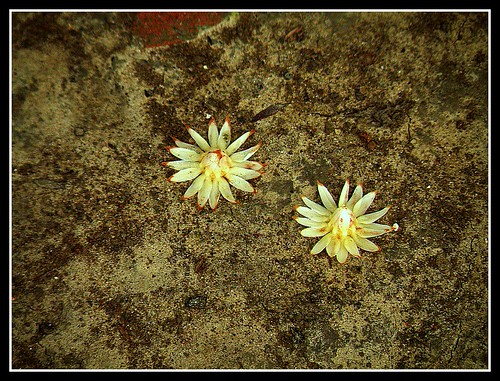
I was in two minds, to ask or not to ask the lady what those flowers she'd put in her hair were called. She had the air of studied dishevelledness- like all Marathi women of a certain age do. a dark green sari with red and gold border, oiled hair tied into a tsotli . So raked some guts (as if I were a boy of 14 asking some girl), "Auntie, aapne jo baal mein phool lagaye hain unko kya kehte hain?" She smiled (Oh! the smile that lit up my day!) and told me the name of the flower [which i've forgotten now :( ], and then she told me the jhaad is called bakul. "Shivaji Park mein Ganesh Mandir ke paas hai."

Photo courtesy: http://www.flickriver.com/photos/noshin_me

I've stopped putting flowers in my hair. The last time I did was at my sister's engagement. It scares me to attract someone now. Not because I'm "booked" or because my loyalties lie in a home far away- perhaps the prospect of being so subtly attractive scares a lot of us. There's something demurely sexy about flowers - especially the way we Indians tend to use them for shringaar. It is like wearing a love potion. Devilishly sweet, yet elusive.